
Black Women Are Three Times More Likely to Die During Pregnancy. Why?
Health / Black Women — REAL POWER.TV
By Dr. Gregory L. Hall, MD
In 2024, Black women in the United States died during pregnancy or within six weeks after at a rate of 44.8 per 100,000 live births. For White women, the rate was 14.2. That is about 3.2 times higher, and the gap has held for decades.
Most of these deaths can be stopped. When state review committees examined more than 1,000 pregnancy-related deaths, they judged more than 84% to be preventable.
This is not a problem for obstetricians alone. Most of the conditions that kill Black mothers are heart, blood pressure and clotting problems that begin before pregnancy and continue long after delivery. Primary care doctors, cardiologists, emergency physicians and the women themselves all have a role.
1. High blood pressure and preeclampsia
Preeclampsia is dangerously high blood pressure that develops during pregnancy, usually after 20 weeks. Black women are at greater risk of it, and in CDC data preeclampsia and eclampsia caused 11.4% of pregnancy-related deaths among Black women.
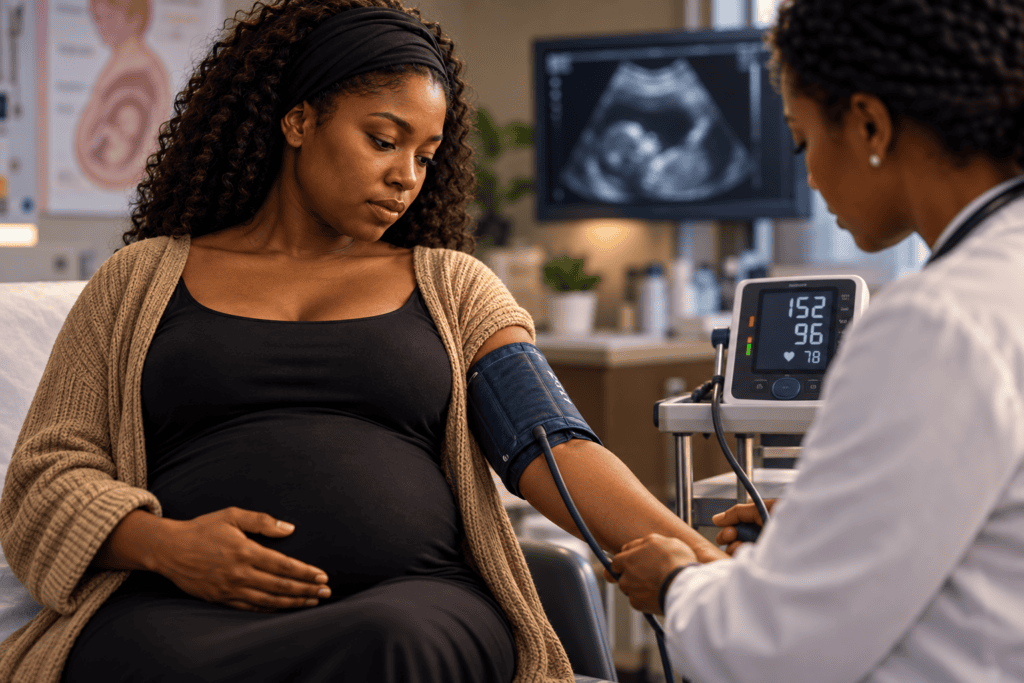
Many Black women enter pregnancy with chronic high blood pressure, which is itself a high-risk factor for preeclampsia. Blood pressure that is well controlled before conception is one of the best protections a woman can have.
A simple step that is often missed. The U.S. Preventive Services Task Force recommends low-dose aspirin (81 mg daily) after 12 weeks for women at high risk. Being Black is listed as a moderate risk factor. A Black woman with one more moderate risk factor, such as a first pregnancy, obesity, age 35 or older, or a family history of preeclampsia, should be considered for aspirin. Ask.
2. Cardiomyopathy and other heart disease
Heart disease is the leading cause of pregnancy-related death for Black women. In CDC review data from 2017 to 2019, cardiac and coronary conditions caused 15.9% of these deaths and cardiomyopathy another 13.9%.
Cardiomyopathy means the heart muscle is weakened and cannot pump well. One form, peripartum cardiomyopathy, develops in the last month of pregnancy or in the months after delivery. Its early symptoms look a lot like a normal pregnancy: shortness of breath, swelling in the legs, fatigue, trouble lying flat. That overlap is exactly why it gets missed. Research consistently finds that peripartum cardiomyopathy is more common in Black women.
3. Blood clots and pulmonary embolism
Pregnancy makes blood clot more easily. That protects against bleeding at delivery, but it also raises the risk of a clot forming in the legs and traveling to the lungs. Pulmonary embolism accounted for 11.9% of pregnancy-related deaths in 2017 to 2019. Sickle cell trait may raise the risk too, so know your status and share it with your obstetrician.

Warning signs: swelling, pain or warmth in one leg; sudden shortness of breath; chest pain that worsens with a deep breath; a racing heart; coughing up blood. These need emergency care, even weeks after delivery.
4. Severe bleeding
Heavy bleeding after delivery caused 10.8% of pregnancy-related deaths among Black women. A national study of more than 360,000 women with postpartum hemorrhage found the death rate for Black women was about five times higher, even after accounting for other health conditions.
Black women are up to three times more likely to develop fibroids, which can keep the uterus from clamping down after delivery. If you have fibroids or anemia, make sure your delivery team knows, and ask whether your hospital has a hemorrhage plan ready.
5. Symptoms recognized too late
In CDC review data, only 13.2% of deaths occurred on the day of delivery. More than half happened after the first week, when a new mother is at home and her care has shifted from her obstetrician to whoever she happens to see.
That is where recognition breaks down. A new mother with shortness of breath may be told she is tired. A headache may be blamed on lack of sleep. Leg swelling may be called normal. Each of these can be the first sign of preeclampsia after delivery, cardiomyopathy or a blood clot.
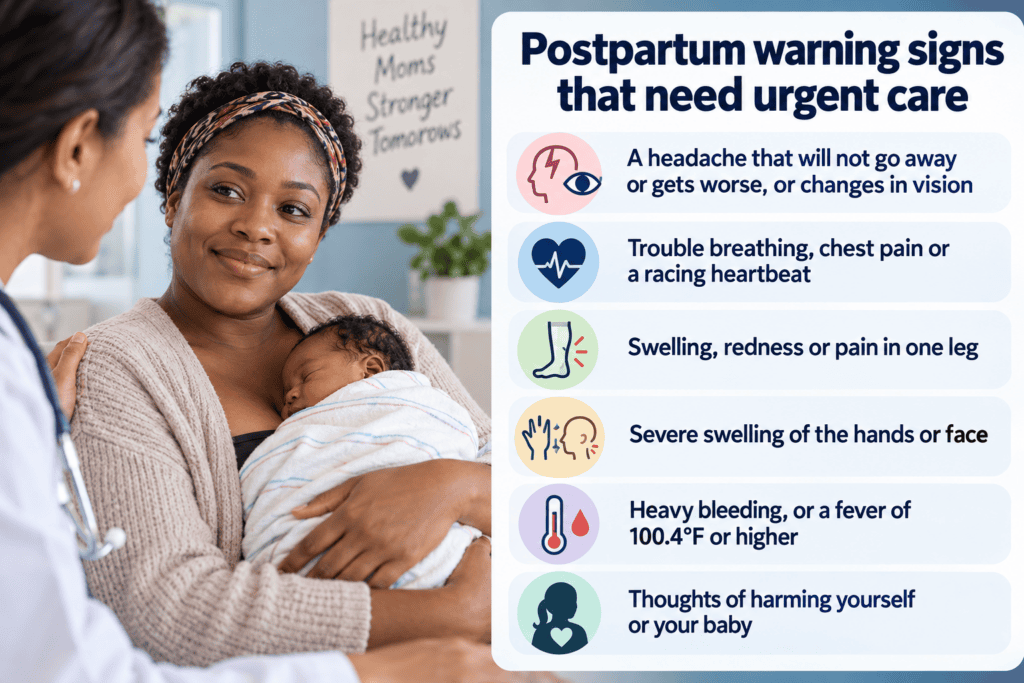
Ohio now provides Medicaid coverage for a full 12 months after pregnancy, up from 60 days. Women should use that year to keep seeing their doctors, especially after high blood pressure, preeclampsia or gestational diabetes.
6. Differences in care
If poverty alone explained this gap, education and income would close it. They do not. A CDC analysis found that Black women with a college degree died from pregnancy-related causes at 5.2 times the rate of college-educated White women.
Part of the explanation is health going into pregnancy. Part is genetics and ancestry. And part is the care women receive. Black women commonly report that their symptoms were dismissed or minimized. Whatever the mix of causes, the lesson is the same: being a Black woman is a reason for clinicians to pay closer attention, not less.
What women and families can do
- Get healthy before pregnancy if you can. Get blood pressure, blood sugar and weight under control before you conceive.
- Know your risks. Sickle cell trait, fibroids, and any family history of preeclampsia, heart failure or blood clots. Tell your obstetrician.
- Ask about aspirin after 12 weeks if you have risk factors for preeclampsia.
- Treat the first year after delivery as part of pregnancy. If you see any doctor for any reason, tell them you were recently pregnant.
- Speak up, and bring someone who will. Say it directly: “I am worried this could be preeclampsia, a heart problem or a blood clot. What have you done to rule that out?”
The numbers are stark, but they are not fixed. Most of these deaths are preventable, and the tools to prevent them already exist. What is needed is earlier recognition, closer attention and care that takes Black women’s symptoms seriously from the first visit through the first year after delivery.
This article was originally published on DrGregHall.com on October 10, 2026, and appears on RealPower.TV, condensed, with the author’s permission. The full version, including the precision-medicine section, guidance for clinicians and the complete source list, is at DrGregHall.com.
REAL POWER.TV
The Story Runs Here First.
Cleveland’s Black digital newsprint. Who holds power here, who is losing it, and what the moves mean before anybody gets around to explaining them to you. Free, straight to your inbox.