Keep It Real! What Authenticity Actually Means in the Age of the Algorithm
What does it mean to “Keep It REAL!” in 2026? In today’s culture, authenticity has become more than a personal virtue. It is a public demand, a marketing strategy, a social media aesthetic and, for many people, a daily negotiation between who they are and how they are seen.
“Keeping it Real” appears everywhere: in political speeches, workplace values statements, influencer captions, brand campaigns and conversations about mental health. Yet the more often people are told to “be real,” the harder it can be to tell what realness actually means.
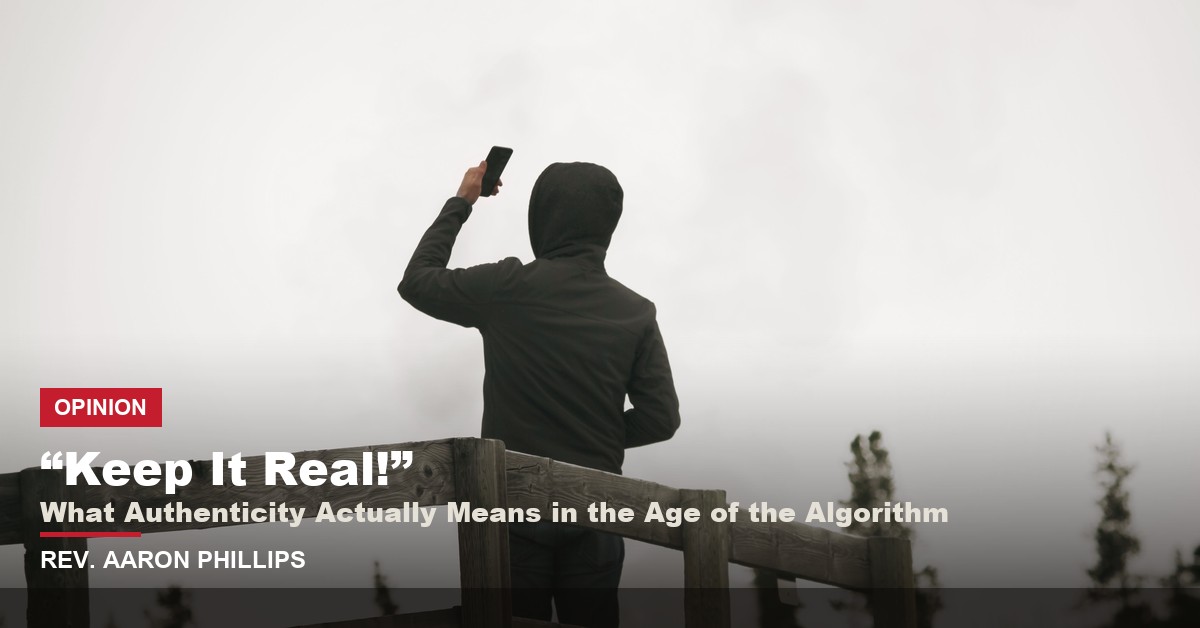
Social media helped turn authenticity into a visible performance. The casual image, the unfiltered confession, and the “day in my life” video often appear spontaneous, but they may be planned, edited, and optimized for attention. Recent cultural research describes this as a paradox of algorithmic life: people are rewarded for seeming natural while learning to package naturalness for the feed.
I grew up in the 70s and 80s watching sitcoms like Good Times, All in the Family, and Gilligan’s Island; then, in the 90s, we all loved watching The Cosby Show, Different World, and Living Single. All those sitcoms have been replaced with reality TV Shows like Real Housewives of Atlanta, The Bachelor, and Survivor. All in an effort for television programming that “Keeps it Real”.
The problem is that none of it is REAL. There are still scripts, plots, production meetings, and rehearsals to ensure a quality performance that audiences can tune in to and be entertained by. The Reality Stars are just as fake as Traditional Celebrities with a lot more extra baggage.
With the explosion of Social Media Platforms, everyone wants to be a celebrity now while still professing to “Keep it Real!” Podcasters and content creators wrestle with how to be performative while staying authentic. It begs the question: can a person be authentic and interesting at the same time?
This tension is especially visible in current audiences, who grew up online and are increasingly alert to the mechanics of visibility. For them, authenticity is not simply the absence of polish. It is the ability to recognize pressure, resist forced performance, and decide when to participate on their own terms.
For me, authenticity now functions as a measure of trust. I am skeptical of polished claims; I have noticed institutions struggling to demonstrate transparency under pressure, and public figures are judged not only by what they say but also by whether their actions appear consistent over time. I believe authenticity is less about constant openness than about alignment: values, behavior, and communication matching closely enough to feel credible.
We must reevaluate what it means to “Keep it Real!” This shift must change the way companies, creators, and leaders communicate. Audiences increasingly reject messages that seem opportunistic, overly scripted, or detached from lived experience. A brand that claims to be part of the community must prove it through support and accountability. There must be actual receipts, not just performances.
The rise of artificial intelligence adds a new layer to the debate. As synthetic images, automated writing, and AI companions become more common, we must ask not only whether something is true, but whether it came from a person. Authenticity is becoming tied to disclosure: we want to know when content is generated, assisted, or staged.
We should stop seeking authenticity from screens. Keeping it Real needs to be placed in community gatherings, local creative spaces, and in-person relationships. We must return to the lost art of having face-to-face conversations with each other. For me, that is truly “Keeping It Real!”
Being authentic means refusing to turn every experience into content. Being authentic means using online spaces more deliberately: sharing less, seeking less for approval, and building smaller communities where conversation matters more than reach.
In the current culture, authenticity may be less about full exposure and more about coherence. It means admitting complexity without turning vulnerability into a brand. It means communicating honestly without demanding constant visibility. It means allowing people, institutions, and communities to be judged by consistency, care, and accountability rather than by how convincingly they perform sincerity.
Authenticity, then, is not the opposite of performance. It is the effort to make performance answer to the truth of one’s values. In a culture where identity is increasingly mediated by platforms, markets, and machines, we must not measure authenticity by likes and clicks but rather by the content and character of our true self. “KEEP IT REAL! BABY, KEEP IT REAL.
REAL POWER.TV
The Story Runs Here First.
Cleveland’s Black digital newsprint. Who holds power here, who is losing it, and what the moves mean before anybody gets around to explaining them to you. Free, straight to your inbox.