Follow the Child: Why Cuyahoga County Needs SMART Plus
Follow the Child: Why Cuyahoga County Needs SMART Plus
When a parent begins treatment for substance use, we understand the need for a plan: appointments, support, follow-up, and people who can help when circumstances change. We should bring that same commitment to a child affected by prenatal substance exposure.
That is the idea behind SMART Plus. It is a proposed approach to connecting children and families with care from infancy forward. Its guiding question is simple: While we help the parent recover, who is consistently following the child?
Cuyahoga County has hospitals, pediatricians, early intervention programs, behavioral health providers, schools, child welfare professionals, and community organizations doing important work. A child may encounter several of these systems while growing up. Yet a referral from one provider does not always mean an appointment was made. An appointment does not always mean a service began. And a service that begins may be interrupted when a family moves, a caregiver changes, or a case closes.
SMART Plus would help close those gaps. It would provide an identifiable point of coordination for participating families, connect them to existing services, and follow up to see whether recommended care was received. The goal is continuity: making sure a child’s needs remain visible as the child grows and circumstances change.
Consider a baby identified as having been exposed to substances before birth. The immediate medical response matters, but the child’s needs may not be fully known at discharge. A developmental concern might appear months later. A speech or learning need might emerge closer to preschool. The family might need help arranging transportation to an appointment or reconnecting with a provider after a move.
Under SMART Plus, appropriate follow-up could continue through those changes. A coordinator could help the family confirm developmental screenings, connect with early intervention when indicated, and keep track of referrals. If the child later lives with a grandparent, enters foster care, or reunifies with a parent, the program could help preserve the connection to appropriate care, consistent with consent, custody, and privacy requirements.
The proposal begins with the child’s individual needs. Prenatal substance exposure alone should not define a child’s future or determine what services that child requires. Nor should it be treated, by itself, as proof that a parent is unfit. Families deserve dignity and support. Children deserve careful attention to what they actually need.
I believe this approach would strengthen the work already underway in our county. A hospital can provide newborn care. An early intervention provider can address developmental needs. A counselor can support emotional health. A school can respond to learning needs. SMART Plus would help connect those efforts over time, especially when the people or systems around a child change.
That connection must go beyond handing a family a phone number. We should ask whether a referral led to an evaluation, whether a recommended service began, and whether it continued. When there is a barrier, the response should be to understand it and help address it. A missed appointment may involve transportation, work schedules, a change in phone number, or uncertainty about where to go next. Good coordination starts by listening.
The proposal also recognizes that children do better when families have support. A parent working toward recovery may also be trying to secure housing, childcare, food, or reliable transportation. Helping a family reach those resources can make it easier for a child to attend appointments and remain connected to care. SMART Plus should work with families as partners, respecting their rights and the knowledge they have about their children.
If adopted, the program should be accountable for its results. County leaders and the public should know how many families participate, whether referrals are completed, where service gaps remain, and whether children are staying connected to appropriate care. Regular reporting would allow us to improve the program based on what families and providers experience. The proposal calls for an implementation plan and evaluation because a promising idea must also work in practice.
Funding and administration deserve the same careful attention. SMART Plus is a proposal for county review, not an enacted program. County Council, the County Executive, legal and fiscal staff, service providers, and families should examine how it would operate and what resources it would require. Existing programs and available funding should be considered as part of that work. We should build a structure that is clear, practical, and sustainable.
This issue matters to me because I have seen how much a young person’s path can be shaped by what happened long before that young person entered a courtroom. Families can seek help and still struggle to navigate disconnected systems. A child can need support at one stage of life, appear to be doing well at another, and face a new challenge later. Our response should have the patience to follow that child’s development.
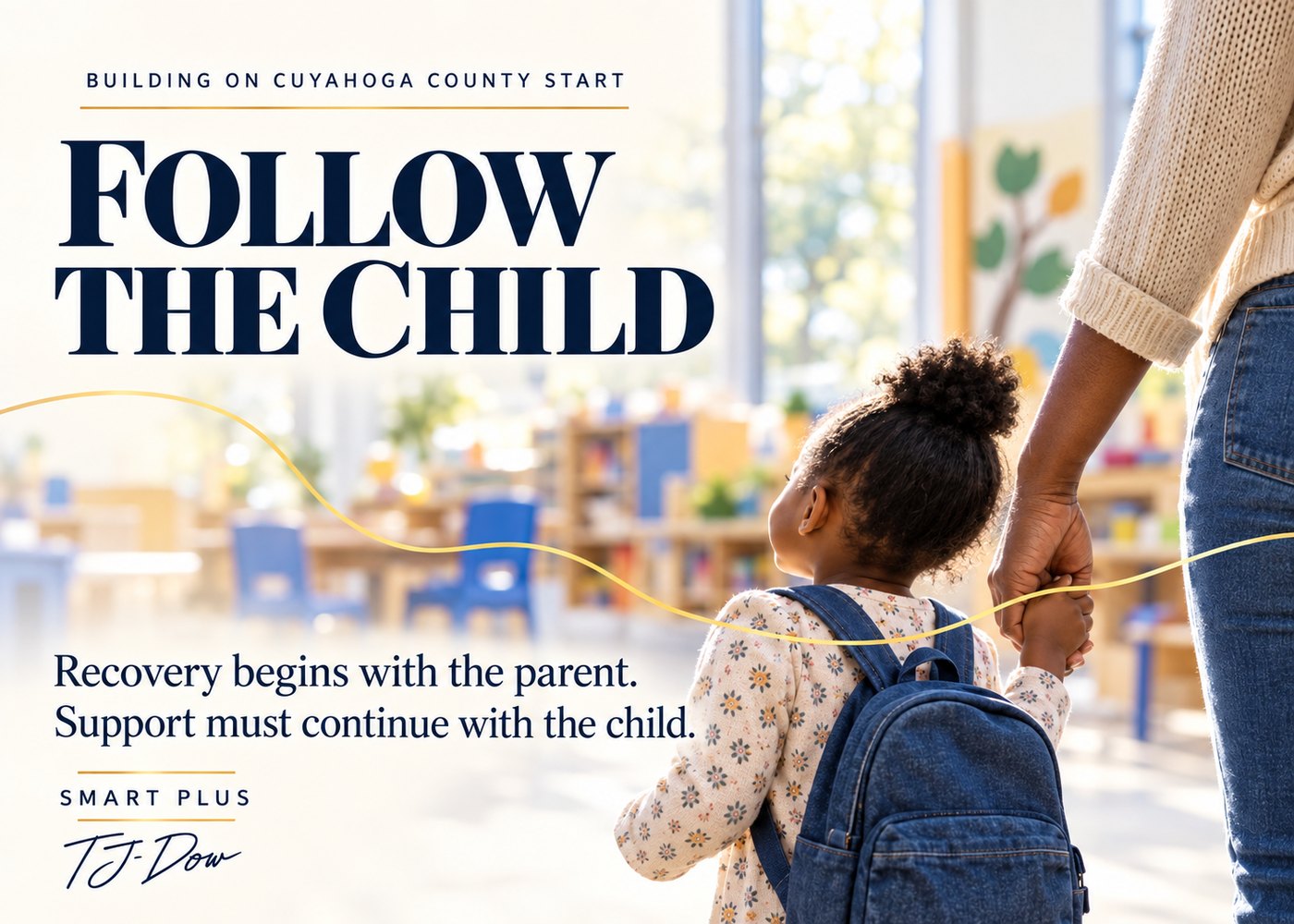
SMART Plus expresses a commitment I believe Cuyahoga County can make: when a child needs support, we will work to keep that support within reach. Recovery may begin with the parent, but our responsibility cannot end there. We must also follow the child.
Families may move. Caregivers and providers may change. Through those transitions, a child should have the chance to remain connected to care, to grow, and to build a healthy future. That is why I support SMART Plus.