603,000 Black Ohioans Sit Out the Midterms. Ask What Their Vote Bought Them.
Politics / The Vote — REAL POWER.TV
From The RealPower Radio Show: 603,000 Black Ohioans sit out the midterms. Vote anyway, then make the system show what your vote bought.
A young brother in Glenville looked Judge Michael Nelson dead in the eye and asked him a question most campaigns are too scared to answer. Why should I vote? You all ain’t doing nothing for us.
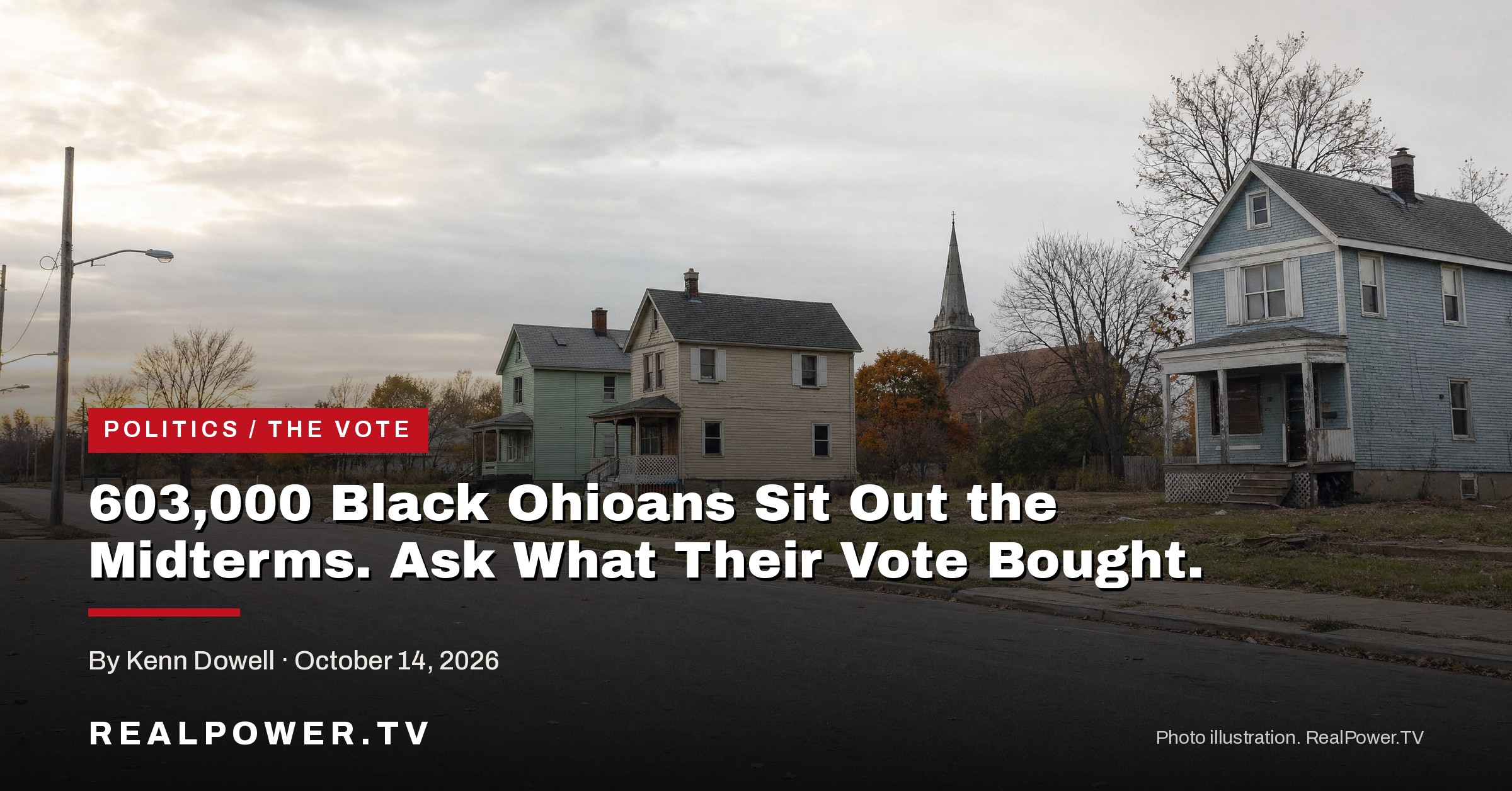
Judge Nelson told that story on The RealPower Radio Show, and he did not dress it up. He gave the young man the usual lines. If you don’t vote, you can’t complain. If you vote, you get services. The brother wasn’t hearing it. Then the judge looked around at the street the young man lived on. It used to be a whole block of homes. Now there are three houses left.
That is the conversation this city keeps avoiding. Not whether Black people should vote. What Black people get when they do.
The numbers came to our table from Shayla L. Davis, president and CEO of the Ohio Legislative Black Caucus Foundation. Her foundation’s report, the State of Black Civics and Power in Ohio, counts 603,000 Black Ohioans who are registered to vote and do not show up for midterm elections. About 162,000 of them are right here in the Cleveland metro area. Roughly 100,000 of those live in the inner-ring suburbs, where she said midterm turnout averages somewhere between 20 and 28 percent, election after election.
These are not strangers to the ballot. Davis was clear about that. Many of them vote for president. They come out when the whole country is watching, then sit down when the races that decide their streets come around. The council seat. The school board. The judge. The state house. The races nobody runs ads for.
And here is the part that should keep every campaign up at night. Davis said statewide races in Ohio tend to break by five to eight points. If even half of those 603,000 voters came back, she said, Black Ohio could change who holds those seats.
So why don’t they come?
Davis named it without blaming the people who stay home. She said we cannot keep beating people up and telling them Black folks need to vote. People are living in food deserts. They can barely afford childcare. The bus route doesn’t get them to work and back in time to pick up their kids. When the candidate shows up talking at thirty thousand feet, the voter is down on the ground trying to make it to Friday. Her line was the truest thing said that hour. The voters own the power, but the voters have to feel that way too.
Now let me say what I said on air, because I have been running this play for twenty years and I know how it goes.
Every cycle the campaigns run a 90-day race. In the Black community it turns into a six-week race. The money shows up late. They pay folks to knock doors for a month and a half. Then they leave, and they don’t come back until the next time they need us. Same play. Same result. And they can run that play because they have already done the math on us. They know about what Cleveland is going to produce. They know about what the suburbs are going to produce. So they spend just enough to get that number and not a dollar more.
That is where the apathy comes from. It is not laziness. It is a rational response to a system that treats our vote as a sure thing and our neighborhoods as an afterthought. When you vote and the grocery store still closes, the school still closes, the bus still doesn’t come and the block still empties out, you start to believe your vote doesn’t buy anything. Somebody in Glenville watched his street go from a neighborhood to three houses. Don’t tell him he’s confused.
But here is where I part ways with the brother in Glenville. Sitting out doesn’t punish the system. It feeds it.
Judge Nelson put it in history. We have only had real federal protection for our vote since the Voting Rights Act was signed in August of 1965. Sixty years. That is one lifetime. Our grandparents bled for a tool most of us have never been taught how to use. Dr. Heather E. Burton said that teaching has to start at home, at the kitchen table and at the cookout, not just in a classroom or a campaign mailer.
And Davis passed along a line from her foundation’s Civic AF video series that every voter should tape to the refrigerator. You are not doing an elected official a favor by voting for them. They are going to vote on your life either way. The only question is whether you had a say in who sits in that chair.
So here is the case, plain.
Vote. Every race, top to bottom, especially the ones nobody is advertising. Then hold the line on what your vote is supposed to buy. Write it down before you go in. Grocery store. Bus line. School. Housing. Safety. After the election, take that list to the people you put in office and make them answer to it. Davis said it herself. If the people representing you aren’t representing you, vote them out. That is the power of the vote.
And stop waiting on the campaign to come knock. I said it on the show and I’ll say it again here. If you are waiting on the council member to call a meeting about turnout, call the meeting yourself. Our people haven’t seen Black power at work in a long time. That is why they don’t trust the process. The way you rebuild that trust is not another flyer. It is a win they can see on their own street.
Early voting is open now in Ohio through Sunday, Nov. 1, and Election Day is Tuesday, Nov. 3. Vote like the young man in Glenville is watching. Because he is.
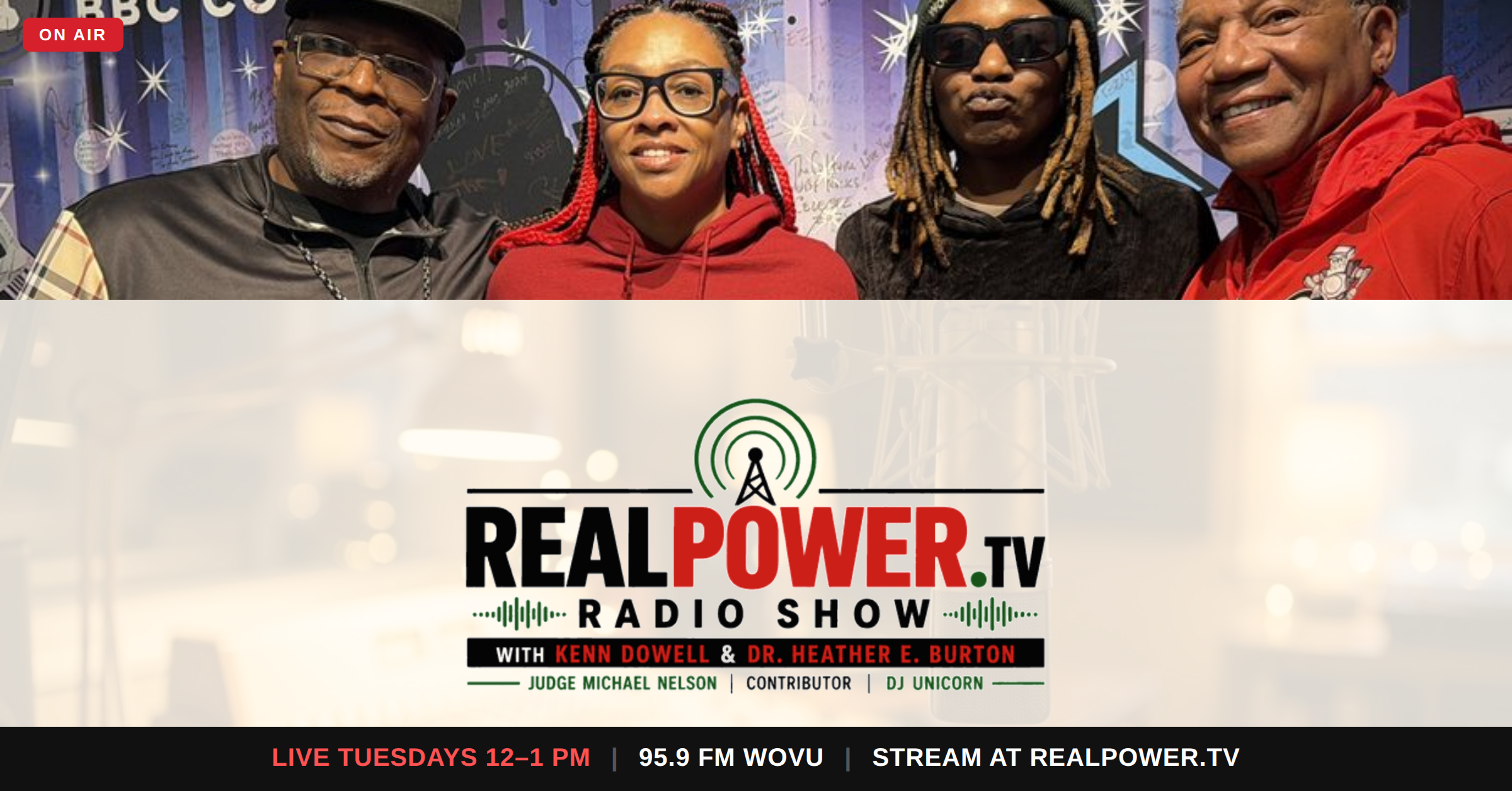
This story recaps a conversation on The RealPower Radio Show, which airs Tuesdays from noon to 1 p.m. on WOVU 95.9 FM and RealPower.TV. Turnout figures are from the Ohio Legislative Black Caucus Foundation’s State of Black Civics and Power in Ohio report, as Shayla L. Davis described it on air.
REAL POWER.TV
The Story Runs Here First.
Cleveland’s Black digital newsprint. Who holds power here, who is losing it, and what the moves mean before anybody gets around to explaining them to you. Free, straight to your inbox.