The Black Agenda
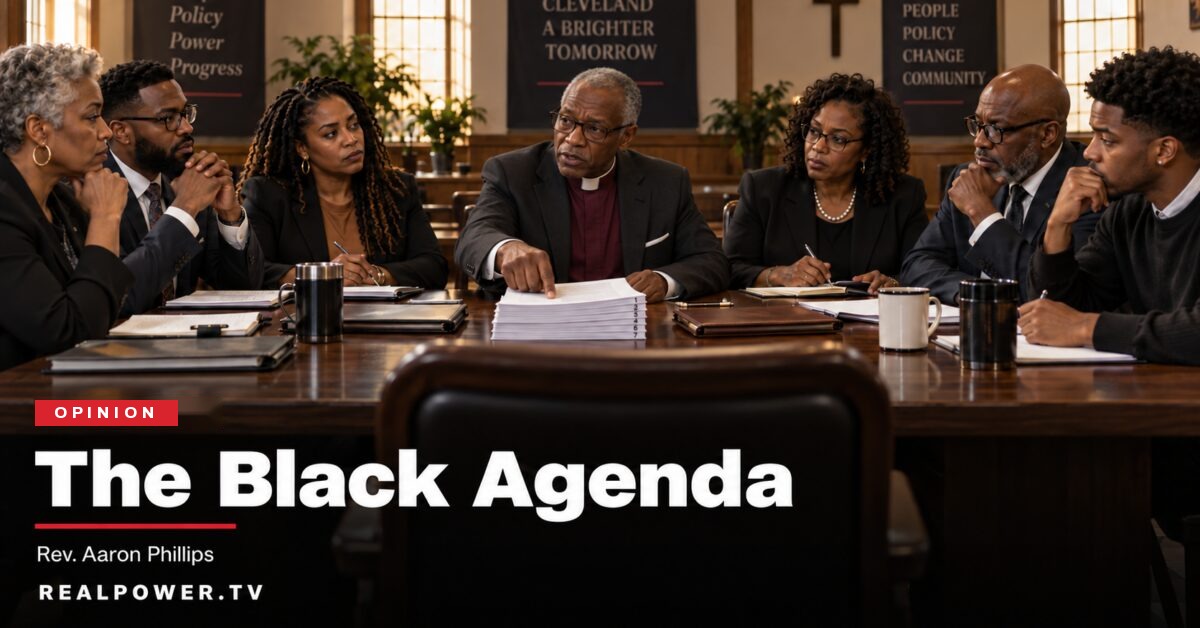
CLEVELAND — I am often asked, “Pastor Phillips, what is the African-American Agenda to present to candidates seeking our support?” What a great question; I’m so glad you asked. Here is my reply.
In this week’s article, I will attempt to lay out an African-American Agenda for all candidates to consider when seeking our support. I surveyed some of the greatest minds in our community to gather input on what our agenda should be. I sought input from Clergy, Civic and Community Leaders, and policy organizers to identify SEVEN top priorities for the African-American Community’s Agenda.
Across the country, affordability has become a defining concern for working families, with housing costs, wages, health coverage and education funding shaping kitchen-table conversations. For many African-American voters, those issues are tied to a broader question: whether government will invest in communities that have long faced barriers to wealth-building, quality schools, stable housing, and fair employment.
After several conversations and research, we identified these themes as critical for the African-American Community. Affordable housing, health care, education, economic empowerment, protecting voting rights, equitable public investment, and support for returning citizens are major priorities for African-American communities heading into the Midterms. These themes need to be translated into a practical midterm agenda for city halls, statehouses, and Congress.
Affordable Housing and Neighborhood Stability
Affordable housing tops our agenda. We are calling for expanded rental assistance, stronger fair housing enforcement, more investment in affordable homeownership, and funding for repairs that allow long-time residents to remain in their homes. Housing policy must address both immediate rent pressures and the long-term racial homeownership gap that has limited generational wealth.
The African-American Community is also pressing candidates to support land banks, down-payment assistance, anti-displacement protections, and partnerships with nonprofit developers that can build and preserve housing without pricing residents out of their own neighborhoods.
Economic Opportunity
Economic opportunity is 1 B on the African-American Agenda. Our agenda calls for fair access to public and private contracting, support for Black-owned small businesses, stronger pathways to union jobs, and targeted workforce development in growing industries such as clean energy, health care, construction, technology, and advanced manufacturing.
Economic policy must include access to capital through community development financial institutions, entrepreneur mentoring, procurement goals, and job training that connects our community directly to employers offering living wages and benefits.
Public School and Trade School Funding
Education funding remains a core issue for African-American families. We must urge candidates to back equitable public school funding formulas, modern school buildings, expanded tutoring, mental health support, early childhood education, and stronger career counseling in districts that serve high numbers of low-income students.
Our agenda must also emphasize trade schools and career technical education. We need more scholarships, equipment funding, apprenticeships, and partnerships between high schools, community colleges, unions, and employers so students can graduate with industry-recognized credentials and clear routes into stable careers.
Access to Affordable Health Care
Access to affordable health care is vital for the African-American community ahead of the upcoming midterm elections. We must demand protection of Medicaid, lower prescription drug costs, expanded community health clinics, maternal health investments, mental health services, and policies that reduce medical debt for working families.
We know health care must be treated as both a medical and economic issue because untreated illness, lack of coverage, and high out-of-pocket costs can destabilize households, reduce employment options, and deepen poverty.
Returning Citizens and Reentry Support
Another priority is funding for returning citizens programs. Advocates are calling for job placement, housing assistance, record-sealing support, counseling, transportation help, family reunification services, and entrepreneurship training for people coming home from incarceration.
Reentry programs reduce recidivism, strengthen families, and improve public safety when they are funded consistently instead of treated as short-term pilot projects. These programs help combat the collateral sanctions returning citizens face every day.
Faith-Based and Nonprofit Community Funding
Churches, mosques, neighborhood associations, and nonprofit organizations remain central to community life in many African-American neighborhoods. We must have an agenda that calls for transparent, accessible funding streams that allow these institutions to support after-school programs, violence prevention, food distribution, senior services, youth mentoring, financial literacy, and neighborhood revitalization.
We need government grant programs to be easier for smaller organizations to apply for, with technical assistance, fair review standards and accountability measures that ensure funds reach trusted local groups doing direct service work.
Diversity in Government Job Opportunities
Our agenda must include a demand for diversity in government hiring, promotions, internships and contracting. We need public agencies to reflect the communities they serve, with fair recruitment, transparent hiring practices, apprenticeship pipelines, leadership development and enforcement of equal employment opportunity protections.
For us, the issue is not only representation but access: government jobs often provide stable income, benefits and career ladders that can help close economic gaps when hiring systems are open, fair and inclusive.
The midterm elections test whether candidates can move beyond slogans and commit to measurable policies. We need candidates to explain how they would fund affordable housing, protect health care, invest in schools, expand trade training, support returning citizens, strengthen community nonprofits and make government employment accessible to qualified applicants from every neighborhood.
This list is not exhaustive. Several other issues could be added to this list. Issues like voting rights, redistricting, police reform, and public safety issues, just to name a few. This list is just a beginning; please add to it as you see fit. What matters most is asking candidates the same question from Janet Jackson’s 2009 hit song: What have you done for me lately?
My question for candidates is simple: “Will you invest in the people who have held these neighborhoods together, or will you ask for their votes without delivering a plan?” I personally don’t see any campaign answering this question, maybe because no one has asked them. WELL, WE ARE ASKING NOW!!!!!
REAL POWER.TV
The Story Runs Here First.
Cleveland’s Black digital newsprint. Who holds power here, who is losing it, and what the moves mean before anybody gets around to explaining them to you. Free, straight to your inbox.